
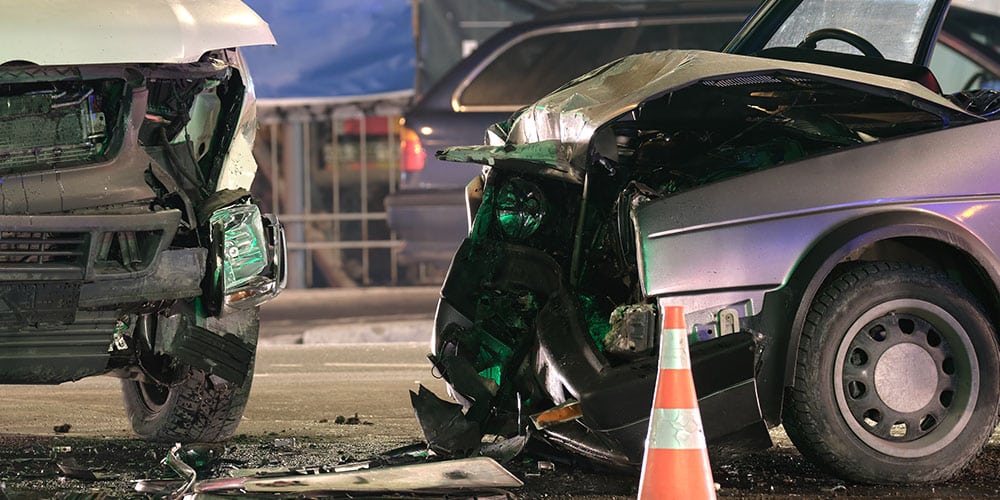
Road rage incidents on Utah highways have become increasingly dangerous, resulting in serious injuries and complex legal claims. Aggressive driving behaviors—from tailgating and brake-checking to threatening gestures and dangerous lane changes—create hazardous conditions that can turn routine commutes into life-threatening situations. The implementation of House Bill 30, known as the “Road Rage Amendments,” has fundamentally changed how these cases are prosecuted and litigated in civil court.
Understanding these changes is essential for anyone involved in an aggressive driving accident, whether as a victim seeking compensation or as someone trying to navigate Utah’s complex insurance system after a collision. At AVS Law Group, we’ve seen a dramatic increase in road rage cases throughout Salt Lake City, Provo, Ogden, and surrounding communities, and we understand the devastating impact these incidents have on victims and their families.
Utah’s Aggressive Driving Problem by the Numbers
Recent data from the Utah Department of Transportation reveals concerning trends in road safety across the state. In 2024, Utah recorded 281 traffic fatalities (up from 279 the year before). While this may seem like a modest change, the steady upward trend reflects broader issues with aggressive driving and road safety enforcement.
The state experiences more than 60,000 car accidents annually. About 18,500 of those result in injuries requiring medical attention—these aren’t minor fender-benders. They’re collisions serious enough to send people to emergency rooms, require surgical intervention, or result in long-term disabilities.
Here’s what’s really concerning: between 2011 and 2019, Utah averaged 14 aggressive driving fatalities per year. That number has jumped to 25 or more annually in recent years. We’re talking about nearly double the deaths attributed to road rage and aggressive driving behaviors. This dramatic increase prompted legislators to take action with the Road Rage Amendments.
High-traffic areas tell their own story. Salt Lake City, West Valley, and St. George collectively report nearly 10,000 accidents each year. These urban corridors (particularly I-15, I-80, and I-215) see the highest concentration of aggressive driving incidents. Provo and Ogden also experience significant road rage problems, especially during peak commuting hours. And if you’re commuting between 3:00 and 7:00 PM? That’s when you’re most at risk. This timing coincides with rush hour traffic when stress levels are elevated, commuters are fatigued, and road congestion creates more opportunities for conflict between drivers.
These statistics underscore why securing experienced legal representation from a qualified Utah personal injury lawyer has become increasingly important. The combination of rising accident rates, more severe injuries, and complex insurance claims means that navigating the aftermath of a road rage incident without professional guidance puts victims at a significant disadvantage.
What Changed with Utah’s Road Rage Law in 2024
Prior to July 2024, aggressive driving behaviors existed in a frustrating legal gray area. While specific actions like tailgating and reckless lane changes were prohibited under existing traffic laws, prosecutors struggled to connect these traffic violations to the driver’s emotional state or intent to intimidate. The existing legal framework treated each aggressive action as a separate, isolated traffic violation rather than recognizing the connected pattern of dangerous behavior that characterizes true road rage.
House Bill 30 addressed this gap head-on. Under Utah Code § 76-3-203.17, road rage is now defined as any criminal offense committed by a vehicle operator “in response to an incident that occurred or escalated upon a roadway and with the intent to endanger or intimidate an individual in another vehicle.”
The key words here are “intent to endanger or intimidate.” This definition captures the essential elements that distinguish road rage from ordinary traffic violations—the reactive nature of the behavior, the connection to a specific roadway incident, and most importantly, the malicious intent behind the actions.
The law introduced several significant enforcement mechanisms that give police officers more tools to address aggressive driving in real-time:
Vehicle Impoundment: Law enforcement officers can now impound vehicles immediately when probable cause exists that a driver has committed a road rage offense. This immediate consequence serves both as punishment and as a safety measure, removing dangerous drivers from the road before they can cause further harm.
Enhanced Penalties: The statute elevates charges one level. Class B misdemeanors become Class A misdemeanors, while Class A misdemeanors escalate to third-degree felonies. This enhancement structure means that behaviors that previously resulted in minor fines can now carry serious criminal consequences.
Financial Penalties: Minimum fines start at $750, with potential for substantially higher penalties depending on the severity of the offense and any resulting damage or injuries.
License Suspension: Convicted offenders also face license suspension, extending the consequences beyond financial penalties and creating a lasting impact on their ability to drive legally in Utah.
If you’ve been injured in a road rage accident, understanding how these criminal penalties affect your civil claim is crucial. Our experienced car accident attorneys in Salt Lake City can help you navigate both aspects of your case.
Why Road Rage Makes Accidents More Dangerous
There’s actual science behind why road rage increases accident risk so dramatically. When drivers experience intense anger, the emotional response centers of the brain (the amygdala) override rational decision-making processes. You get tunnel vision. Your peripheral awareness shrinks. Reaction times slow because you’re so focused on retaliating against another motorist rather than avoiding hazards.
Common road rage behaviors include tailgating at highway speeds, sudden lane changes without proper clearance, brake-checking, blocking other vehicles from passing, and excessive horn use. Each of these actions becomes exponentially more dangerous at interstate speeds—we’re talking 70+ mph on I-15.
The situation often escalates when multiple drivers become involved. One driver’s aggressive action prompts retaliation from another, creating a feedback loop where both parties operate with impaired judgment at dangerous speeds. This dynamic explains why road rage accidents frequently result in severe injuries and significant property damage. It’s not just one person making a bad decision; it’s two or more angry drivers essentially weaponizing their vehicles.
How Utah’s No-Fault Insurance System Complicates Road Rage Claims
Utah operates under a no-fault insurance system, which adds complexity to road rage accident claims. Understanding how this system works is crucial for anyone pursuing compensation after an aggressive driving incident.
Under Utah Code § 31A-22-307, drivers must carry Personal Injury Protection (PIP) coverage that pays the first $3,000 in medical expenses regardless of fault. This means that initially, your own insurance company pays for your medical treatment, regardless of who caused the accident.
However—and this is important—road rage incidents typically involve high-speed impacts that generate medical costs far exceeding this threshold. Emergency room visits, diagnostic imaging, specialist consultations, and follow-up care can easily cost tens of thousands of dollars. Physical therapy, surgery, and ongoing treatment push costs even higher.
Once damages exceed the no-fault limits, injured parties can pursue claims against the at-fault driver and step outside the no-fault system. This is where the road rage element significantly impacts case strategy and outcomes.
Demonstrating that the other driver engaged in road rage (particularly when criminal charges under the enhanced penalty statute have been filed) strengthens negligence claims considerably. Rather than simply proving carelessness, plaintiffs can show the driver intentionally engaged in conduct designed to endanger or intimidate others. This distinction matters because it demonstrates a higher degree of culpability and often justifies greater compensation.
But here’s the catch: Standard auto insurance policies cover negligent acts but typically exclude intentional conduct. If an insurance company successfully argues the driver intended to cause harm, they may deny coverage entirely under the intentional acts exclusion. This leaves injured parties pursuing compensation directly from individuals who often lack sufficient assets to pay substantial medical bills and lost wages. Many judgment-proof defendants simply cannot satisfy large damage awards, leaving victims with uncollectible judgments.
Effective legal representation from an experienced Utah car accident lawyer requires balancing these competing interests—establishing conduct serious enough to warrant enhanced compensation while maintaining access to insurance coverage. This requires strategic case development, careful evidence presentation, and nuanced legal arguments that thread the needle between proving egregious behavior and preserving insurance coverage.
Need help with your road rage accident claim? Contact AVS Law Group at 801-876-7771 for a free consultation.
What to Do Immediately After a Road Rage Accident in Utah
Safety must be the first priority following a road rage accident. If the other driver continues displaying aggressive behavior or appears potentially violent, remain in the vehicle with doors locked and call 911 immediately.
Here’s what’s critical: avoid further engagement. Any confrontational behavior—including arguing through windows or exiting the vehicle to confront the other driver—can be used later to establish shared responsibility. Under Utah’s new law, engaging in aggressive behavior may result in criminal charges for both parties.
Request police response to every road rage incident. An official police report provides essential documentation. When officers arrive, report any threatening statements, following behavior, or intimidating actions by the other driver. Accurate, complete information in the police report becomes crucial evidence later.
While waiting for the police, document the scene thoroughly using a smartphone camera. Photograph all vehicle damage from multiple angles. If witnesses are present, obtain their names and contact information before they leave the scene. (People have a habit of disappearing quickly after accidents.) Write down any threatening statements made by the other driver while the incident remains fresh in memory.
Seek medical evaluation within 24 hours, even when injuries are not immediately apparent. Adrenaline frequently masks pain and injury symptoms in the immediate aftermath of a collision. Insurance companies routinely argue that delayed medical treatment indicates injuries were not severe or were caused by other factors. Don’t give them that ammunition.
When reporting the incident to insurance companies, provide factual, brief information without detailed speculation. Something like: “The other vehicle tailgated me for approximately two miles, then struck my rear bumper.” Save comprehensive statements for after consulting with legal counsel.
As a leading Salt Lake City personal injury law firm, we recommend contacting an attorney before giving any recorded statements to insurance companies. Our team at AVS Law Group can guide you through this process and protect your rights from the start.
Insurance Company Tactics in Road Rage Cases
Insurance adjusters approach road rage claims with specific strategies designed to minimize payouts. Their primary investigation focuses on whether the conduct qualifies as “intentional.” Adjusters carefully review police reports for any statements suggesting the driver “meant to” cause harm, as classifying the incident as intentional conduct may allow coverage denial.
Adjusters also scrutinize the claimant’s actions for any contributing behavior. Questions about brake-checking, hand gestures, or verbal exchanges are designed to establish comparative fault. Under Utah’s modified comparative negligence rule, compensation is reduced by the claimant’s percentage of responsibility. If a claimant is found 50% or more at fault, they recover nothing.
The Utah Insurance Department requires insurers to respond to claims within 15 days and make coverage decisions within 30 days. Road rage cases frequently extend beyond these timeframes due to complexity. Meanwhile, medical bills accumulate, income is lost, and financial pressure builds.
Insurance companies time settlement offers strategically, presenting deliberately low offers when claimants face maximum financial stress. These early settlement offers typically fail to account for long-term medical needs, future lost earning capacity, or appropriate compensation for pain and suffering. Once a settlement release is signed, the claim cannot be reopened—period. It doesn’t matter how inadequate the compensation proves to be later.
What Damages Can You Recover in a Utah Road Rage Accident?
Road rage accidents typically result in severe injuries due to high-speed impacts and little advance warning for evasive action. Victims often cannot brace for impact, leading to more serious injuries than in typical accidents. Consequently, compensable damages are often substantial and fall into several distinct categories.
Economic Damages
These include all medical expenses: emergency room treatment, ambulance transportation, surgical procedures, hospitalization, medications, medical equipment, physical therapy, occupational therapy, and future medical care needs. Many road rage victims require ongoing treatment for years after the initial accident.
Property damage to vehicles and other possessions is also compensable. Lost income encompasses not only missed workdays during recovery but also reduced future earning capacity if injuries prevent returning to previous employment. For victims who suffer permanent disabilities, this loss of earning capacity can represent hundreds of thousands or even millions of dollars over a lifetime.
Non-Economic Damages
These compensate for pain and suffering, emotional distress, anxiety about driving, and post-traumatic stress disorder. Road rage victims frequently develop lasting psychological trauma due to the violent nature of these incidents. Many victims experience flashbacks, anxiety attacks when driving, avoidance of highways or specific roads, and difficulty sleeping. The psychological impact often persists long after physical injuries heal.
Spouses may recover loss of consortium damages for lost companionship and relationship impacts resulting from the injuries. This includes loss of affection, companionship, comfort, and sexual relations.
Punitive Damages
These serve to punish particularly egregious conduct and deter similar behavior by others. Unlike compensatory damages that aim to make victims whole, punitive damages punish wrongdoers and send a message that such conduct will not be tolerated. Road rage cases—especially those resulting in criminal convictions under enhanced penalty statutes—represent strong candidates for punitive damage awards. Courts recognize that intentional, aggressive driving that endangers others deserves punishment beyond mere compensation for injuries caused.
Our team has successfully recovered substantial compensation for road rage victims throughout Utah, including in Provo, Ogden, West Jordan, and Sandy. Contact us to discuss the potential value of your claim.
Why You Need a Utah Road Rage Accident Attorney
Road rage claims exist at the intersection of criminal law, insurance law, and personal injury law—three distinct legal areas with different procedural rules and evidentiary standards. Successfully navigating this complexity requires specialized knowledge and experience.
Evidence requirements differ substantially from standard accident cases. Proving specific intent to endanger requires police reports, witness testimony, dashcam footage, and often expert analysis of driving patterns and behaviors. Gathering, preserving, and presenting this evidence effectively demands legal expertise.
Insurance companies deploy significant resources to defend road rage claims, including investigators, accident reconstruction experts, and defense attorneys. Unrepresented claimants face substantial disadvantages when opposing these resources.
Perhaps most importantly, experienced attorneys understand how to value claims properly. Insurance companies deliberately make low initial offers, hoping financial pressure will prompt acceptance. These initial offers rarely reflect the true value of claims when future medical needs, lost earning capacity, and pain and suffering are properly calculated. A qualified car accident lawyer in Utah ensures clients receive fair compensation rather than accepting inadequate settlements.
How AVS Law Group Helps Road Rage Accident Victims
Victims of road rage incidents need legal counsel that understands both Utah’s evolving legal landscape and the insurance complications these cases present. AVS Law Group brings extensive experience handling car accident claims throughout Utah, including complex road rage cases in Salt Lake City, Provo, Ogden, and surrounding communities.
Case development begins immediately with the initial consultation. The firm acts quickly to preserve critical evidence—requesting police reports, securing dashcam footage, and identifying witnesses before evidence is lost. All communication with insurance companies is handled by the firm, protecting clients from making statements that could damage their claims.
AVS Law Group operates on a contingency fee basis, meaning clients pay no attorney fees unless compensation is recovered. This structure removes financial barriers to quality legal representation when clients need it most.
Our attorneys have successfully handled numerous road rage cases, securing compensation for medical expenses, lost wages, pain and suffering, and punitive damages. We understand the unique challenges these cases present and have the trial experience necessary to take cases to court when insurance companies refuse to offer fair settlements.