
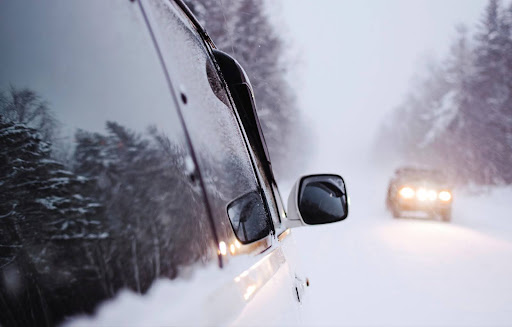
When winter arrives in Utah, the landscape transforms into a winter wonderland that draws visitors from around the world. But those same picturesque snow-covered roads create some of the most dangerous driving conditions in the nation. Every year, thousands of Utah drivers end up in winter weather accidents, and the question that follows is almost always the same: who’s actually responsible when ice and snow play a role in the crash?
At AVS Law Group, we’ve handled countless winter weather accident cases, and we know determining liability isn’t always straightforward. Bad weather doesn’t automatically let drivers off the hook, but it doesn’t necessarily mean an accident was unavoidable either. If you’ve been injured or your vehicle was damaged during Utah’s snowy months, understanding how the law approaches fault in these situations is critical.
The Reality of Winter Driving in Utah
Utah’s winter season brings unique challenges that drivers must navigate from October through April. The state experiences everything from sudden blizzards along the Wasatch Front to black ice on mountain passes and heavy snowfall in canyon areas leading to popular ski resorts. Interstate 15, Interstate 80, and canyon roads like Big Cottonwood and Little Cottonwood are particularly notorious for winter accidents.
While winter weather creates hazardous conditions, the data reveals important insights about when and where these accidents occur. According to preliminary 2024 traffic data, while winter sees more crashes due to hazardous weather conditions, summer months actually record higher fatality numbers due to increased speeds. December consistently shows the highest crash rates throughout the year, with over 6,000 accidents reported in that month alone. Salt Lake County experiences the most weather-related crashes in absolute numbers, though rural counties face higher fatality rates when winter accidents do occur.
Despite the predictability of these seasonal hazards, too many drivers fail to adjust how they drive. Some keep going at posted speed limits even when conditions clearly demand slower speeds. Others follow way too close behind other vehicles, making it impossible to stop safely on slick roads. And plenty of people neglect basic vehicle maintenance—driving on worn tires that can’t grip properly in snow and ice.
These decisions have real consequences. Transportation safety data shows winter weather significantly increases the risk of serious accidents. But here’s what the law makes clear: drivers have a duty to adapt their driving to match current road conditions, no matter what the weather throws at them.
How Does Utah Law Determine Fault in Winter Accidents?
Here’s a common misconception: many people think icy roads or heavy snowfall automatically make an accident a “no-fault” situation or an “act of God” that nobody could have prevented. That’s just not true, and believing it can be costly. Utah law holds drivers to a standard of reasonable care based on the circumstances they’re facing.
The legal principle here asks one fundamental question: What would a reasonable, careful driver do in these same conditions? This standard means drivers need to take several key precautions when winter weather hits.
First, drivers must reduce their speed to maintain control of their vehicle. Posted speed limits represent the maximum safe speed under ideal conditions, not a target speed that must be maintained in all weather. When roads are snow-covered or icy, driving at the posted limit may constitute negligence if a reasonable driver would have slowed down further.
Second, drivers need to increase their following distance substantially. The space that works fine on dry pavement becomes dangerously inadequate when stopping distances double or triple on ice. A reasonable driver leaves enough room to come to a complete stop without striking the vehicle ahead, even if that vehicle stops suddenly.
Third, drivers must ensure their vehicles are properly equipped and maintained. Bald tires, malfunctioning brakes, or inadequate defrosting systems can all contribute to an accident. When these mechanical issues combine with winter weather, the driver who failed to maintain their vehicle properly may be held liable for the resulting collision.
Utah’s Traction Law and Driver Responsibilities
Utah has specific regulations designed to keep roads safe during winter weather. The Utah Department of Transportation enforces what’s known as the Traction Law, which applies to certain roadways between October 1st and April 30th, or whenever conditions warrant restrictions.
Under these regulations, vehicles traveling on designated restricted roads must meet specific equipment requirements. Four-wheel-drive and all-wheel-drive vehicles must have either tires marked with the three-peak mountain snowflake symbol or M+S designation, or they must use chains or other approved traction devices. Two-wheel-drive vehicles face stricter requirements, needing the three-peak mountain snowflake tires or chains on all drive wheels. Standard all-season tires do not meet these requirements when traction restrictions are active.
Failure to comply with the Traction Law can result in fines, denial of access to certain roads, and importantly for liability purposes, evidence that a driver was not taking reasonable precautions. If a driver causes an accident while violating the Traction Law, that violation can serve as strong evidence of negligence in a personal injury claim.
Understanding Comparative Negligence in Winter Crashes
Utah follows a modified comparative negligence rule, which becomes particularly important in winter weather accidents where multiple parties may share responsibility for a crash. Under this system, an injured person can still recover damages as long as they are found to be 50 percent or less at fault for the accident.
Here’s how this works in practice. Imagine a multi-vehicle pileup on I-15 during a snowstorm. The investigation reveals that the driver who initiated the collision was traveling too fast for conditions, but the driver who was rear-ended was following too closely to the vehicle in front of them, and a third driver had ignored the Traction Law requirements.
Common Winter Accident Scenarios in Utah
Understanding typical winter accident patterns can help establish liability:
Black Ice Accidents on I-15 and I-80: These often occur in shaded areas or overpasses where ice forms invisibly on the road surface. Drivers who fail to anticipate black ice during freezing temperatures may be held liable, especially during morning and evening hours when temperatures drop.
Whiteout Conditions in Canyon Areas: Little Cottonwood Canyon, Big Cottonwood Canyon, and Parley’s Canyon frequently experience sudden whiteout conditions. Drivers who continue at unsafe speeds during poor visibility can be held responsible for resulting accidents.
Multi-Vehicle Pileups: Chain reaction accidents on snowy highways often involve questions about following distance and speed. Each driver’s actions are evaluated independently to determine their share of liability.
Ski Resort Traffic Accidents: The heavy traffic to Alta, Snowbird, Brighton, and Solitude creates unique hazards. Tourists unfamiliar with mountain driving combined with local commuters can lead to complex liability questions.
Intersection Collisions on Icy Roads: When vehicles slide through intersections despite attempting to stop, liability often depends on whether drivers were maintaining appropriate speeds and distances before encountering the ice.
In this scenario, fault might be distributed among multiple parties. Maybe the speeding driver bears 60 percent of the fault, while the driver who was following too closely bears 25 percent, and the driver with inadequate traction equipment bears 15 percent. Under Utah’s comparative negligence system, each party can potentially recover damages from the others, but their recovery gets reduced by their own percentage of fault.
This system makes sense because winter weather often creates complex situations where more than one person’s actions led to an accident. It means victims aren’t completely barred from recovery just because they made a small mistake, while still holding everyone accountable for their share of what went wrong.
When Are Winter Accidents Truly Unavoidable?
The law does recognize that drivers need to take reasonable precautions, but there are rare circumstances where a winter accident genuinely couldn’t be avoided. These situations are far less common than most people think, though.
For an accident to be truly unavoidable, several things typically need to line up. The hazardous condition has to appear suddenly without any warning, giving the driver zero opportunity to react. The driver must have been operating their vehicle reasonably before the hazard showed up—that includes driving at an appropriate speed for conditions. And there can’t be any alternative action the driver could have taken to avoid the collision.
Black ice is one scenario drivers often claim made an accident unavoidable. But Utah courts have consistently held that just because there’s ice on the road doesn’t excuse negligent driving. Weather forecasts, temperatures, and the time of year should alert reasonable drivers to the possibility of icy conditions. Drivers who go ahead without accounting for these hazards may still be held liable, even if they didn’t actually see the ice before losing control.
Similarly, sudden whiteout conditions during a snowstorm don’t automatically relieve drivers of liability. A reasonable driver who encounters deteriorating visibility should slow down or pull over safely until conditions improve. Continuing to drive at unsafe speeds despite poor visibility often constitutes negligence. For more information about Utah’s winter driving requirements and current road conditions, visit the Utah Highway Safety Office.
Liability for Road Maintenance and Government Entities
Sometimes winter accidents involve questions about whether government entities properly maintained the roads. Municipalities and the Utah Department of Transportation have a duty to maintain roads in a reasonably safe condition, which includes plowing snow and treating icy surfaces.
However, pursuing claims against government entities involves significant challenges. Sovereign immunity laws provide substantial protections to government agencies, and special notice requirements apply. In most cases, you must file a notice of claim with the government entity within one year of the accident, which is much shorter than the standard statute of limitations for personal injury cases.
To succeed in a claim against a government entity for inadequate road maintenance, you typically need to prove several elements. You must show that the entity knew or should have known about the hazardous condition, that it had a reasonable opportunity to address the hazard, and that its failure to do so was unreasonable under the circumstances.
Weather alone doesn’t establish government liability. Plows can’t be everywhere at once during a storm, and agencies must prioritize resources based on traffic volume and the severity of conditions. However, if a known problem area goes untreated for an extended period, or if an entity’s snow removal plan falls well below industry standards, a claim may be viable.
Commercial Drivers and Employer Liability
Winter accidents involving commercial vehicles present additional considerations regarding liability. Delivery drivers, truckers, and other commercial operators face the same duty to drive reasonably in winter conditions, but their employers may also bear responsibility for accidents. If you’ve been injured in an accident involving a commercial truck or delivery vehicle, our experienced semi truck accident lawyers can help you navigate these complex cases.
Under the legal doctrine of respondeat superior, employers can be held liable for the negligent acts of their employees committed within the scope of employment. This means that if a delivery driver causes an accident while rushing to make a deadline during a snowstorm, both the driver and the company may be liable.
Commercial drivers and their employers face heightened responsibilities in several areas. Trucking companies must ensure their vehicles receive proper maintenance, including tire replacement when tread depth becomes inadequate. They must train drivers on winter driving techniques and safe practices. And they must not create policies or quotas that pressure drivers to take unreasonable risks in dangerous conditions.
When accidents involve commercial vehicles, multiple insurance policies may provide coverage, and corporate entities typically have greater resources to compensate injured parties. However, these cases also tend to be more complex, with companies often mounting aggressive defenses to minimize their liability.
What Steps Should You Take After a Winter Weather Accident?
What you do immediately after a winter accident can make a huge difference in your ability to establish liability and recover fair compensation. Even if you’re shaken up or hurt, try to take these steps if it’s safe to do so.
First priority: make sure everyone’s safe and call 911 to report the accident and get medical help for anyone who’s injured. Even if injuries seem minor at the scene, having emergency responders document the accident and check everyone out creates an important record.
Second, document everything you can about the scene. Take photographs of vehicle damage, road conditions, tire tracks in the snow, ice buildup, weather conditions, and the overall accident scene. These photos can be incredibly valuable later when you’re trying to establish what conditions existed at the time of the crash. If any road signs are showing the Traction Law is in effect, photograph those too.
Third, gather information from all parties involved and any witnesses. Get contact details, insurance information, and statements about what they observed. Witnesses who saw the accident unfold or who can describe the road conditions provide crucial corroboration of your version of events.
Fourth, avoid making statements about fault at the scene or on social media. Insurance adjusters and defense attorneys will scrutinize everything you say for evidence that you were partially responsible. Describing what happened is fine, but don’t admit fault or apologize, as these statements can be used against you even if you weren’t actually at fault.
Finally, get medical attention right away, even if you don’t think you’re seriously hurt. Some injuries—particularly soft tissue injuries and head trauma—may not show symptoms immediately. Getting checked out creates a medical record linking your injuries to the accident, which becomes essential if you need to pursue a claim later on.
Dealing with Insurance Companies After Winter Accidents
After a winter weather accident, insurance adjusters will likely contact you fast—sometimes within hours or days. These professionals often seem friendly and helpful, but remember that insurance companies are businesses focused on minimizing what they pay out.
Insurance adjusters love to use winter weather as a tool to deny or reduce claims. They’ll argue that the ice or snow caused the accident, not driver negligence. They might suggest that anyone would have crashed in those conditions, implying the accident was unavoidable. Or they’ll jump on any statements you make about the weather to argue you were partially at fault for driving in dangerous conditions.
Early settlement offers rarely account for the full extent of your damages. Medical bills can keep mounting as treatment continues. You might miss work during your recovery. Vehicle repairs could cost more than initial estimates suggested. And some injuries result in long-term complications that aren’t obvious in the days right after an accident.
Before you give a recorded statement to any insurance company—even your own insurer—consider talking with an experienced personal injury attorney. Utah law doesn’t require you to provide a recorded statement to another driver’s insurance company, and doing so without legal guidance can seriously hurt your claim.
How AVS Law Group Can Help with Your Winter Accident Claim
At AVS Law Group, we’ve handled countless winter weather accident cases throughout Utah. We know how insurance companies operate, what evidence you need to establish liability, and how to build strong cases that result in fair compensation for our clients.
We serve clients throughout the Salt Lake City metro area, Utah County, and across the Wasatch Front who have been injured in winter weather accidents. Whether your accident occurred on I-15 during a snowstorm, in Parley’s Canyon due to black ice, or on Little Cottonwood Canyon Road while heading to the ski resorts, our team knows Utah’s roads, weather patterns, and how local courts handle these cases.
Our approach starts with a thorough investigation of your accident. We get police reports, interview witnesses, and analyze weather data and road conditions from the time of the crash. We document your injuries with medical records and expert opinions. When we need to, we work with accident reconstruction specialists who can demonstrate how the accident happened and who was at fault.
We handle all communications with insurance companies, protecting you from tactics designed to minimize your claim. We know which arguments adjusters typically make in winter weather cases, and we’re ready to counter them with solid evidence and strong legal arguments.
If we can negotiate a fair settlement through direct discussions with the insurance company, we’ll do it efficiently. But if the insurer refuses to offer reasonable compensation, we’re fully prepared to take your case to court. Our trial attorneys have a proven track record of success in personal injury litigation, and insurance companies know we won’t back down from a fight.
Throughout the process, we keep you informed about your case’s progress and ensure you understand your options at every stage. We work on a contingency fee basis, meaning you pay no attorney fees unless we recover compensation for you.
Protecting Your Rights After a Utah Winter Accident
Winter weather creates challenging driving conditions, but it doesn’t eliminate drivers’ responsibilities or your right to compensation if someone else’s negligence injured you. Utah law requires all drivers to operate their vehicles reasonably given the circumstances they face, and failing to do so can result in serious liability. Our team of experienced car accident lawyers understands how to prove liability in winter weather cases and fight for the compensation you deserve.
If you’ve been injured in a winter weather accident, time is critical. Evidence can disappear quickly as snow melts and memories fade. The sooner you consult with an attorney, the better positioned you’ll be to protect your rights and pursue the compensation you deserve.
Don’t let insurance companies convince you that winter weather makes an accident your fault or that your claim isn’t worth pursuing. Contact AVS Law Group today for a free consultation about your case. We’ll evaluate what happened, explain your legal options, and help you understand what your claim may be worth. Call us or visit our website to schedule your consultation and take the first step toward recovering the compensation you need to move forward after a winter accident.
Frequently Asked Questions About Utah Winter Car Accidents
Can I be held liable for an accident on icy roads in Utah? Yes. Utah law requires drivers to adjust their driving to match road conditions. Simply stating that roads were icy does not absolve you of liability. You must reduce speed, increase following distance, and drive reasonably for the conditions you face.
What is Utah’s Traction Law? Utah’s Traction Law requires vehicles on designated roads to have proper winter tires or traction devices during winter months (October 1 – April 30). Two-wheel-drive vehicles need three-peak mountain snowflake tires or chains. Four-wheel and all-wheel-drive vehicles need M+S or 3PMSF tires or chains.
How does comparative negligence work in Utah winter accidents? Utah follows a modified comparative negligence rule. You can recover damages if you’re 50% or less at fault, but your compensation is reduced by your percentage of fault. For example, if you’re 30% at fault in a $100,000 case, you’d recover $70,000.
Can I sue the government for not plowing roads in Utah? It’s difficult but possible. Government entities have sovereign immunity protections, and you must file a notice of claim within one year. You must prove the entity knew about the hazard and failed to reasonably address it.
What should I do immediately after a winter car accident in Utah? Call 911, document the scene with photos (including road conditions), get contact information from witnesses, seek medical attention, and avoid discussing fault. Contact an experienced personal injury attorney before giving recorded statements to insurance companies.
Does my insurance go up if I’m in a winter weather accident? This depends on fault determination and your insurance policy. If you’re found not at fault, your rates typically won’t increase. However, at-fault accidents usually result in premium increases, regardless of weather conditions.
How long do I have to file a claim after a Utah winter accident? Utah’s statute of limitations for personal injury claims is generally four years from the date of the accident. However, claims against government entities require filing a notice of claim within one year, so it’s crucial to act quickly.
Contact AVS Law Group for Your Free Winter Accident Consultation
If you’ve been injured in a Utah winter weather accident, don’t wait to protect your rights. The experienced trial attorneys at AVS Law Group are ready to fight for the compensation you deserve.
Call us today at (801) 876-7771 for a free, no-obligation consultation. We work on a contingency fee basis—you pay nothing unless we win your case.
Our Salt Lake City office is conveniently located to serve clients throughout Utah. Contact us online or by phone to discuss your winter accident case today.